
How Organizing Your Home Calms Your Brain
Your home is an extension of your nervous system. When it’s cluttered, your brain remains on high alert. Clearing distractions lowers stress hormones and helps your brain and body rest. The more peaceful your home, the more relaxed your nervous system.
Why does this matter? Your nervous system has a limited amount of energy. Even if you're not consciously looking at the mess, your brain is busy scanning the background. This drains the mental fuel you need to focus, solve problems, manage your emotions, and make good decisions.
When your home is organized, your nervous system stops wasting energy on processing the clutter. It redirects that energy toward your physical health by improving your sleep, digestion, and immune system. Organizing isn’t just a home project; it’s preventive wellness.
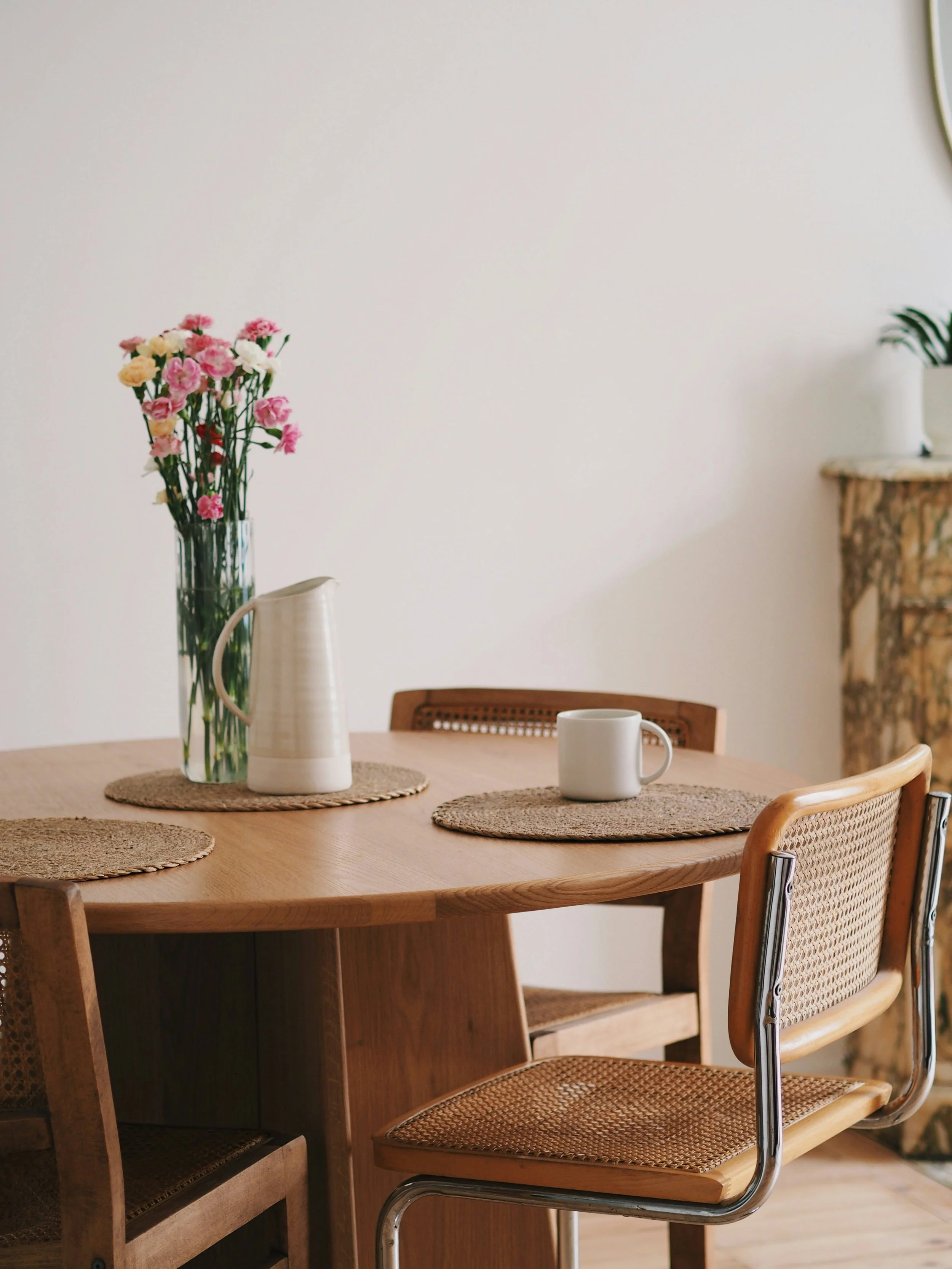
In this post, I share how organizing your home can boost your health. We’ll look at why visual clutter makes it hard to concentrate, how clear surfaces can physically reduce your stress and why the order in which you organize matters. While there are many ways to organize, I focus on the KonMari Method®. Its process and emphasis on "sparking joy" help your nervous system shift from alert to relaxed.
What is visual noise?
The Science: Yale researchers (2024) found that "neural crowding,” having too many objects in your peripheral vision, actually messes with how information flows to your brain. When your eyes take in too much at once, your brain needs to work harder to filter out distractions. This background scan continually drains your energy and decreases focus.
Does this sound familiar? Think about a room or space where you just can’t seem to relax. People often get used to the mess and think they are ignoring the piles on the desk or the overflow in the closet. But your brain doesn't actually ignore them. It has to try not to notice them. When your brain is stuck in this constant loop of processing clutter, it leaves you feeling irritated, tired, and unable to focus. You may call it “brain fog.”
The KonMari Method: With this approach, organizing always starts with discarding. People choose only what sparks joy or is practical, and let go of the rest. When you have fewer items to process, your brain can finally stop scanning and start resting.
How do clear surfaces reduce stress?
The Science: A study in the Journal of Environmental Psychology (2025) suggests that clutter negatively impacts our well-being. The researchers explain that messy rooms are difficult for the brain to process because they lack "perceptual fluency." Simply put, this means your brain struggles to read the room easily.
Think of a clear counter as a single, simple sentence. Your brain can read it instantly, understand it, and move on. A cluttered counter is like a page of text with no spaces or punctuation. Your brain has to work much harder to figure out what's important and what's not. In a messy room, your nervous system constantly has to sift through visual noise to find what you actually need. This background processing causes mental fatigue and makes it harder to make even simple decisions.
Does this sound familiar? When your counters are covered with a mix of mail, keys, miscellaneous items, and half-finished projects, it becomes hard to do anything else. Because of all the variety, your brain doesn't know where to start. The thought of tidying up feels overwhelming, so you end up doing nothing.
Objects on a surface tend to act like magnets, attracting more clutter. The pile keeps growing, your stress rises, and you feel stuck. Your home loses its ability to help you recharge because your nervous system is constantly scanning the mess visually, which is draining.
The KonMari Method: This is why we focus on giving each item a specific spot. Keeping your surfaces clear improves the "fluency" of your home. It makes your environment easy for your brain to understand at a glance. This tells your nervous system that the work is done, which helps slow your heart rate and decrease stress.
Does the order of organizing matter?
The Science: According to the American Medical Association (2025), our ability to make decisions is a limited resource. When we make too many choices in a day, we experience decision fatigue. This is a physical drain on your brain that leads to four major symptoms:
Procrastination: You put off making the next decision.
Impulsivity: You make a rash decision based on little evidence.
Avoidance: You walk away from the decision entirely.
Indecision: You go back and forth between different choices.
Does this sound familiar? Full of excitement and ambition, you decide that today is the day you finally tackle a big project, like sorting through old photos or organizing sentimental memory boxes. You jump in with high energy, but after a little while, you find yourself staring blankly at a single picture. You can't decide whether it stays or goes. Suddenly, you feel like you need a nap or a sweet treat (my go-to used to be chocolate). You might start putting things back into the box haphazardly or just leave the mess on the floor and go watch TV. As the day goes on, your mind wears down and reaches its limit for making emotionally important decisions.
The KonMari Method: We always tidy by category in a specific order: Clothes, Books, Papers, Komono (Miscellaneous), and Sentimental. Clothes are the perfect warm-up because most of us have less emotional attachment to a t-shirt than to a childhood diary. By starting here, you're training your "joy-checking" muscles on easier decisions.
As you progress through the categories, your decision-making becomes quicker and more confident. By the time you reach the sentimental category, your brain is better at managing your mental energy.
Can the KonMari Method reduce stress?
The Science: Organizing acts as a form of preventive wellness. Your home is where your body should recover from the demands of the outside world. If your home is cluttered, your brain remains on high alert. This can eventually interfere with your sleep, digestion, immune system, and more. Clearing visual noise and clutter that keeps you on edge allows your nervous system to relax.
Does this sound familiar? We often view health and wellness as something that happens at a doctor’s office or the gym. We pay attention to what we put into our bodies, but we often ignore our environment. If you're eating well and exercising but coming home to a space that keeps your brain in a constant fight-or-flight mode, where you feel a subtle, ongoing sense of stress or anxiety, it's worth addressing. You might notice difficulty winding down at night or a heaviness immediately upon walking through your front door.
The KonMari Method: By choosing only what sparks joy and letting go of everything else, you clear the way for your mind to rest. When your home stops draining your energy, that energy can be redirected back into your physical, emotional, and social well-being. You may notice that you sleep more soundly, have more patience with yourself and the people you love, and have more time and focus for important tasks.
***
A well-ordered home is a sanctuary for rest and well-being. As Marie Kondo said, “Tidying your physical space allows you to tend to your psychological space. Once you have your physical world in order, you can more effectively tune in to your internal world (and vice versa).”
