
Reflections from Japan (Part Two)
Welcome back to part two of my reflections on the 2026 KonMari Japan Retreat. If you missed the start of this journey, you can catch up in part one.
Our time on the retreat — designed by Marie Kondo, her husband, Takumi, and their team — was shaped by her latest book, Letter from Japan. Alongside certified consultants from around the globe, we used core cultural themes to explore how her organizing philosophy can transform our daily routines and spaces.
Today, we dive into the final three themes. For each one, I’ll share an excerpt from our KonMari journal, a personal memory from the trip, and a practical shift you can try at home.
Savor: Ajiwau
Purify: Kiyomeru
Harmonize: Chouwa-saseru
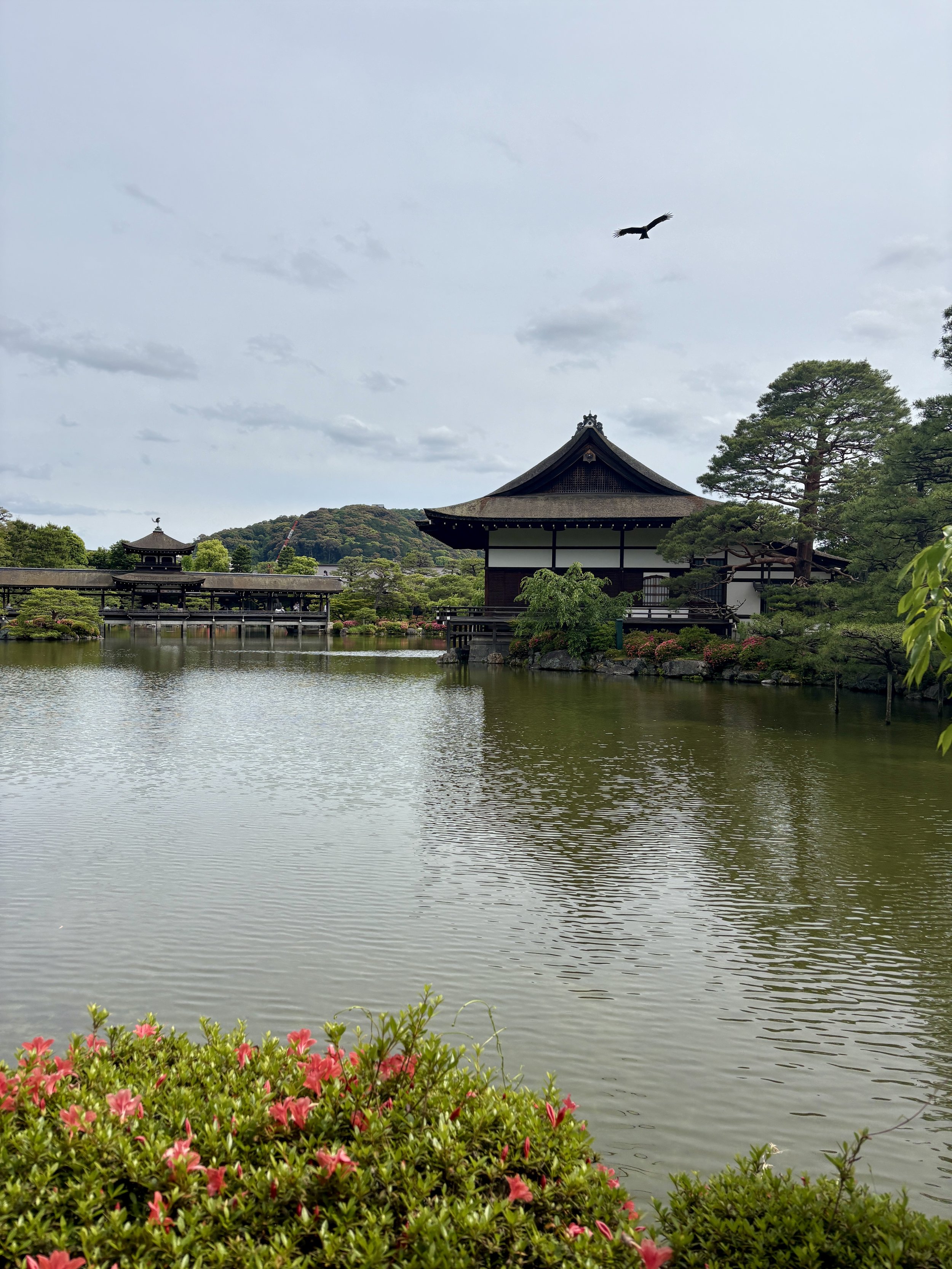
Savor: Ajiwau
Beyond simple enjoyment, savoring is a way to bring your heart in order.
Ajiwau is the practice of gifting your time, presence, and full attention to what is right in front of you. In a world that constantly pulls us toward the next distraction or future goal, savoring anchors us in the present moment. Marie reflects on this in her book by preparing and eating onigiri, or hand-formed rice balls. Savoring teaches us that fulfillment can be found in slowing down to fully experience the ordinary details of our day-to-day lives.
The Memory from Japan
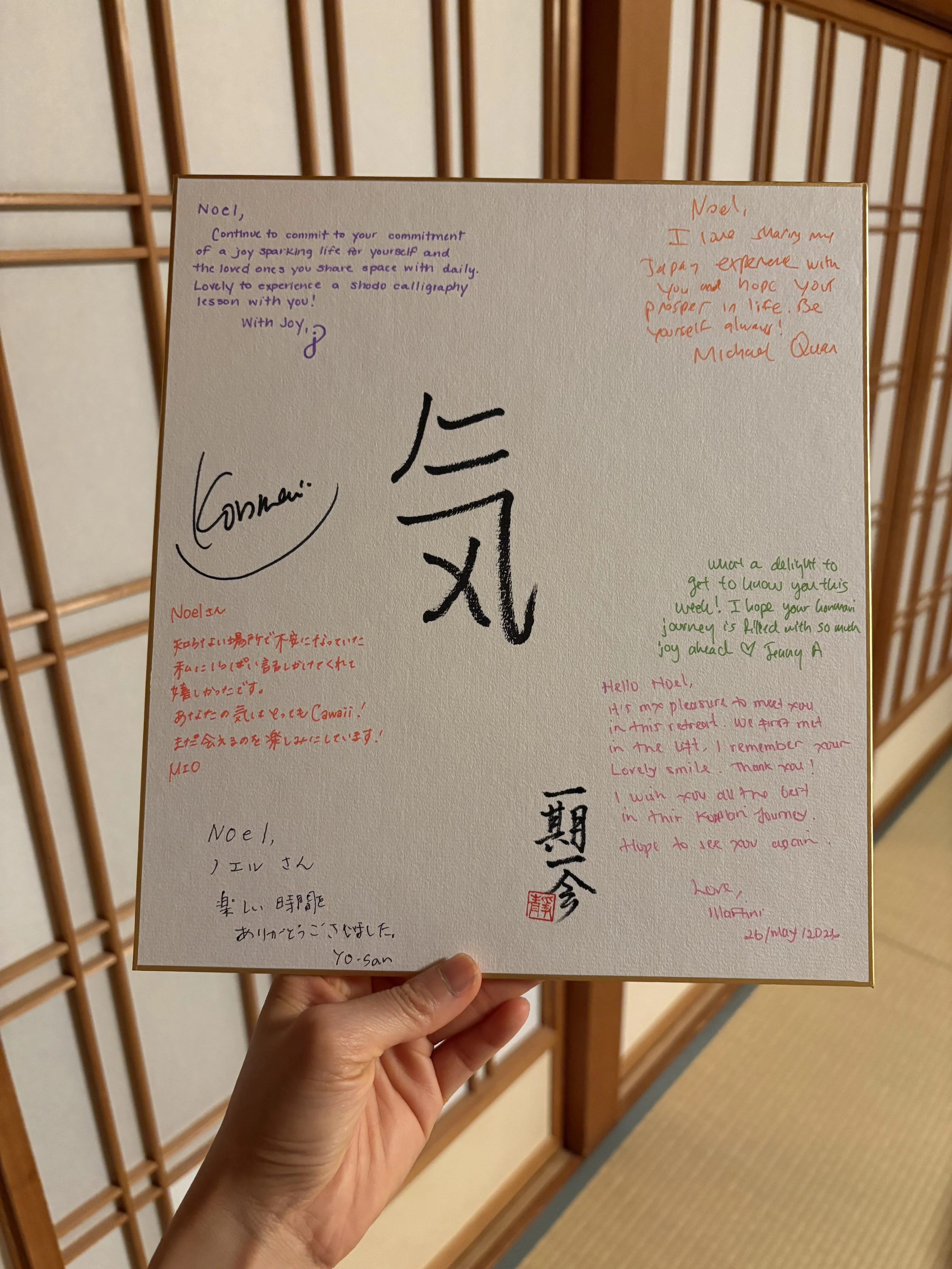
My understanding of this concept deepened during a shodo, or traditional Japanese calligraphy, lesson. I expected to just write a Japanese character on a piece of paper, but that was not the case. Before we even picked up our pens, our instructor invited us to ground ourselves, let go of outside distractions, and choose a word that felt deeply meaningful to our lives.
We practiced deep breathing as the instructor explained the mechanics behind the brushstrokes, demonstrating how each mark was meant to be created with deliberate intention. When it came time to write my chosen word, "consider," it became a single-minded focus on each individual motion.
Practicing at Home
In our daily routines, we often move through tasks with a broad, end-goal focus. We wash the dishes just to get them clean, or we rush through a recipe just to get food on the table. What would it be like to shift your focus and give your full attention to a routine task in a way you haven't before?
The next time you prepare a simple meal, try slowing down your movements. Wash and chop your ingredients gently, taking a moment to genuinely notice their shapes, textures, and vibrant colors. As you stir, slow down your pace and treat the food with care, tuning in to the changing aromas filling the kitchen. By stepping away from a rush-to-finish mindset and immersing yourself in the physical sensations of cooking, you turn an ordinary chore into an act to be savored.
Purify: Kiyomeru
Our true selves are far braver, more resilient, and more powerful than we often imagine.
Kiyomeru is the process of intentional purification, designed to release the mind, body, and spirit from accumulated heaviness. In Letter from Japan, Marie writes about the ancient tradition of takigyo — the ritual of standing and praying beneath a mountain waterfall. This practice is meant to wash away external noise, self-doubt, and mental clutter while cultivating mental strength.
The Memory from Japan
I had the opportunity to experience this concept of purification on the first day of the retreat. We practiced Zazen meditation with a third-generation monk at the Ryosokuin Buddhist Temple, established in 1358. He taught us to cultivate present-moment awareness by drawing our attention away from our constant thoughts and judgments and instead observing our surroundings through our senses.
The goal was simply to be. When our mental energy is scattered, it keeps us separate from our environment and from ourselves. Through meditation, the mind naturally slows, creating space for internal peace. Letting go of the urge to constantly analyze or judge my thoughts felt foreign, but it helped me be kinder to myself. I came home with a genuine calm I had never felt before.
Practicing at Home
We often look outward when we feel overwhelmed, but consistently practicing purification at home lets you reset without seeking comfort beyond your own walls. Consider treating purification as a reset for your well-being and comfort by choosing rituals that directly affect how your body feels. This might look like a foot-bathing ritual at the end of the day — filling a basin with warm water and Epsom salts, cleansing mindfully, then massaging lotion into fatigued areas. Perhaps a thermal reset by draping a heated wrap over your neck and shoulders, letting the heat melt away muscle tension as you sip a cup of warm tea.
By treating these actions as your own gentle form of takigyo, you can wash away the noise from your day. Much like emerging from a waterfall, these resets can help clear away the burdens we carry, revealing the brave, resilient, and powerful self that has always been within us.
Harmonize: Chouwa-saseru
Find your ikigai, the thing that inspires you to get out of bed each morning — the quiet motivation that fills your life with meaning and purpose.
In Letter from Japan, Marie shares that true harmony is the ultimate destination of her philosophy, and it centers on a beautiful Japanese concept called ma — the intentional pause, the silent gap, or the empty space. She explains that in conversation, what goes unsaid is just as important as what is spoken. Similarly, in our homes, the empty spaces we leave are just as vital as the areas filled with beautiful things. True harmony is about creating physical and mental breathing room so that our homes, our belongings, and our spirits can coexist in balance.
The Memory from Japan
I experienced this sense of balance firsthand during a sushi-making workshop. Our instructors had beautifully and intricately prepared more than a dozen local ingredients, cutting and presenting them in ways I had never seen before. Each of us was given six pieces of rice to decorate to our heart's content. Though tempted to use as many ingredients as possible, I chose restraint, selecting only a few to highlight their individual beauty.
Between the instructions and the sushi-making, there were stretches of silence, yet no one felt the need to fill them out of discomfort. We were simply together, without needing to fill the space with noise. I found ma — the intentional pause — in this stillness, which allowed me to focus on the sushi. It created harmony among the people who shared the room, my own creativity, and the meaning of our time together.
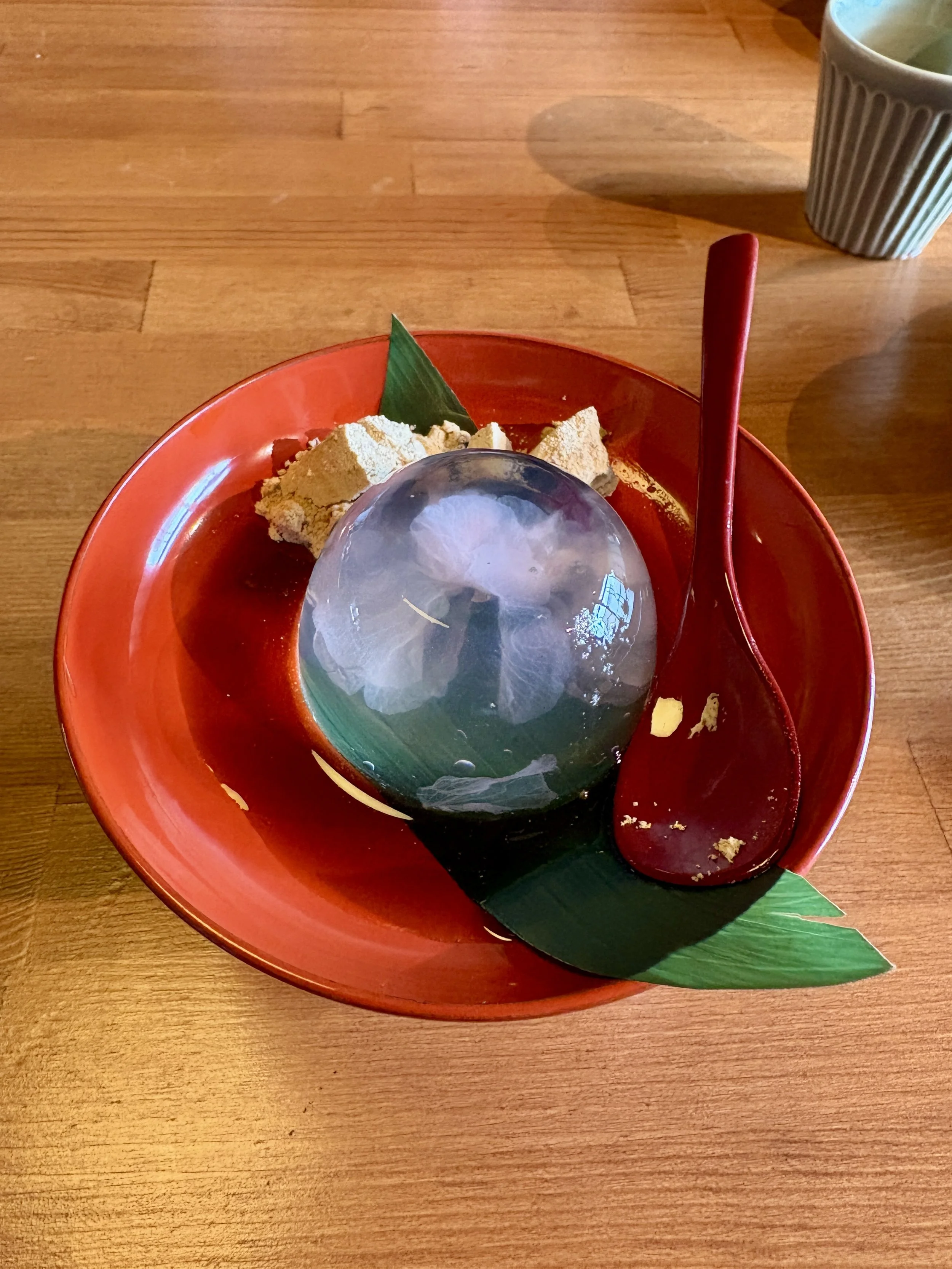
In fact, I was so in the moment that I didn’t pull out my camera during the shodo calligraphy or sushi-making workshops, a testament to the power of ma. I did manage to snap a shot of the stunning raindrop cake dessert at the end of our sushi meal.
Practicing at Home
To bring chouwa-saseru into your daily routine, consider the true goal of tidying: it is not only about discarding items or organizing shelves, but about establishing a peaceful relationship with your surroundings. It is difficult to hear the quiet motivation of your ikigai when your life, your schedule, and your home are crowded with physical and mental clutter. By intentionally protecting the empty spaces in your life, you can give your attention to your purpose more easily.
You can practice this by cultivating ma in three distinct areas of your day-to-day life. In your physical space, instead of feeling the urge to fill every bare wall or tabletop, leave a countertop or shelf entirely untouched, treating that open space as a deliberate, peaceful design choice. In your schedule, intentionally protect an unscheduled block of time with no chores or obligations. Finally, build ma into your daily transitions — perhaps sitting in quiet reflection for five minutes after waking before checking your phone, or driving home in silence without the radio.
***
By learning about and practicing these six themes, I hope you find meaningful ways to clear away the daily stress, protect your energy, and transform your home into a sanctuary that continually restores and renews you.
